01 / System●
Pipeline
Photon → pixel → meaning
Detection, denoising, deblurring, demosaicing, color reconstruction, and semantic priors collapse into a single end-to-end network. No legacy ISP. No green.

A research company
For seventy years, seeing in the dark has meant strapping a glowing green tube to your face. Tarsir Vision is replacing it with deep learning — models trained to turn a single photon into useful sight.
Conventional night vision is a brute-force amplifier. It collects whatever photons hit a tube, multiplies them with high voltage, and dumps the noisy result onto a phosphor screen. The hardware hasn't fundamentally changed since Vietnam.
We treat sight as inference. Our sensor counts individual photons across a wider spectrum than human vision; a model trained on millions of paired dark/light scenes reconstructs the world in real color, in real time, at one watt.
"The right architecture for a camera that sees in the dark is not a better tube. It's a model that knows what the world looks like."
— Tarsir Vision research notes
Detection, denoising, deblurring, demosaicing, color reconstruction, and semantic priors collapse into a single end-to-end network. No legacy ISP. No green.
Twenty-eight grams. USB-C. Drop-in for drones, security cameras, robotics, automotive. The first SKU ships to design partners this winter.
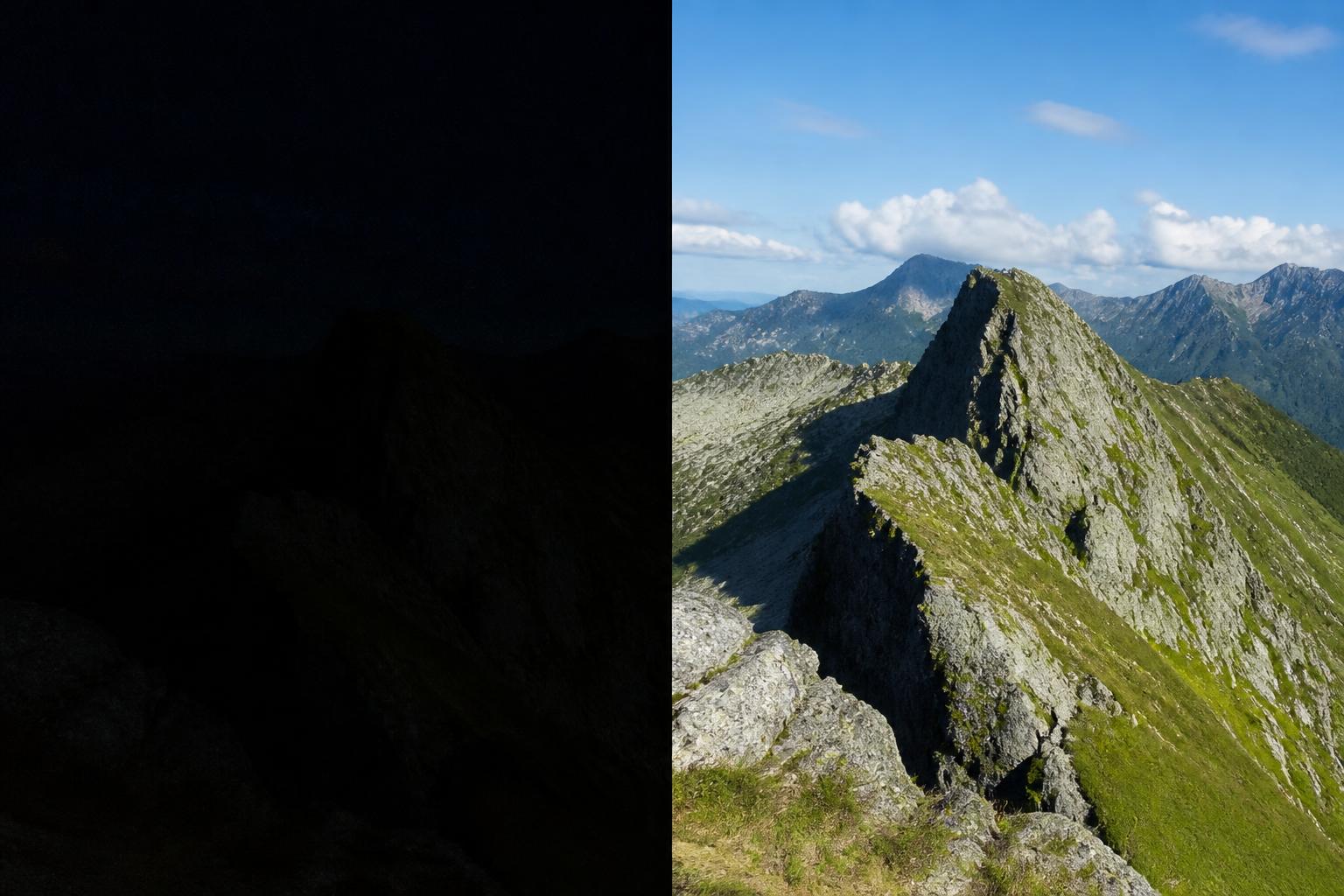 UNAIDED · 0.0008 LXTARSIR · RECONSTRUCTED
We're working with a small number of design partners in defense, autonomy, robotics, and conservation.